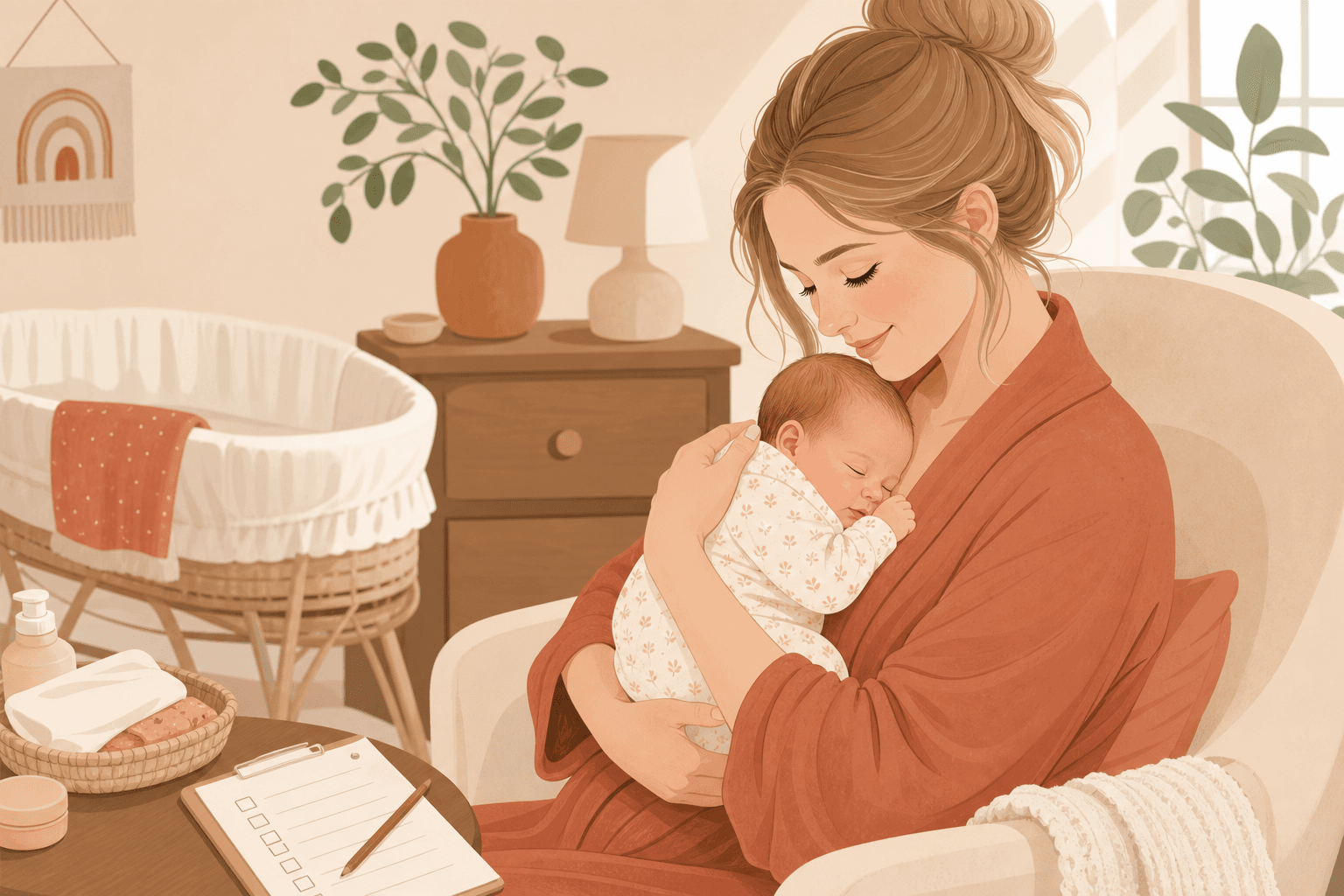
New parent is plural even when one body birthed, and moms, dads, partners, and co-parents share sleepless floors with different fears — feeding, breaking the baby, never resting again.
Starting together beats one person hoarding knowledge, and shared checklists, split roles, same numbers on the fridge.
This starter guide is for both — read tonight, pick tasks, one printable together.
How you might be feeling
Partners feel sidelined at feeds or useless during recovery — hide behind early return to work, and moms resent partner sleeping while holding appointment mental load, and both perform calm while panic-searching separately — duplicate tabs, half support, and visitors address mom only — partners redirect: we are both learning. Same-sex and adoptive families define roles; baby care and parental mood guidance still apply.
What is usually normal
HealthyChildren expects both parents at early visits when possible — shared literacy reduces mom isolation, and labour division shifts weekly — revisit without scorekeeping. Pick one American Academy of Pediatrics (AAP)-aligned checklist; defer forum fights until week three, and parental mental health affects both — either can need obstetrician (OB) or therapist.
What you can try tonight
-
Five minutes together — read TL;DR aloud. Assign next night diapers and breakfast.
-
First 72 hours checklist on fridge — both log feeds or diapers.
-
Emergency numbers — pediatrician, nurse line. Either parent calls.
-
Visitor script — shared text: resting until [date]; porch drop welcome.
-
First night home page if night one — partner reads safe sleep while mom rests if possible.
When to contact someone
911 for baby emergency or harm fears in either parent.
Nurse line — either parent; say new parents unsure.
pediatrician or obstetrician (OB) for feeding failure, mom's physical symptoms, mood in either parent.
At your appointment
Attend together if possible. Say: new parents need shared plan.
- Split feed and diaper notes
- Each parent's fears
- Work schedule affecting nights
Related reading
- Shared map: Hub first days home
- Night one: First night home with baby
- Overwhelm: Postpartum overwhelm help
- Red flags: When to get help postpartum
Official sources
- Centers for Disease Control and Prevention (CDC) — Infants (0–1 year)
- HealthyChildren — Baby
- MedlinePlus — Postpartum care
If printable helps
First 72 hours at home checklist for both on fridge. Newborn survival mini binder for shared notes. First 7 days new mum guide — partners read logistics. First 6 weeks roadmap together. New mum overwhelm reset guide when flooded.